
Tesamorelin for Ghrelin Research: A 2026 Guide for Australian Scientists
By Peak Haven11 min read
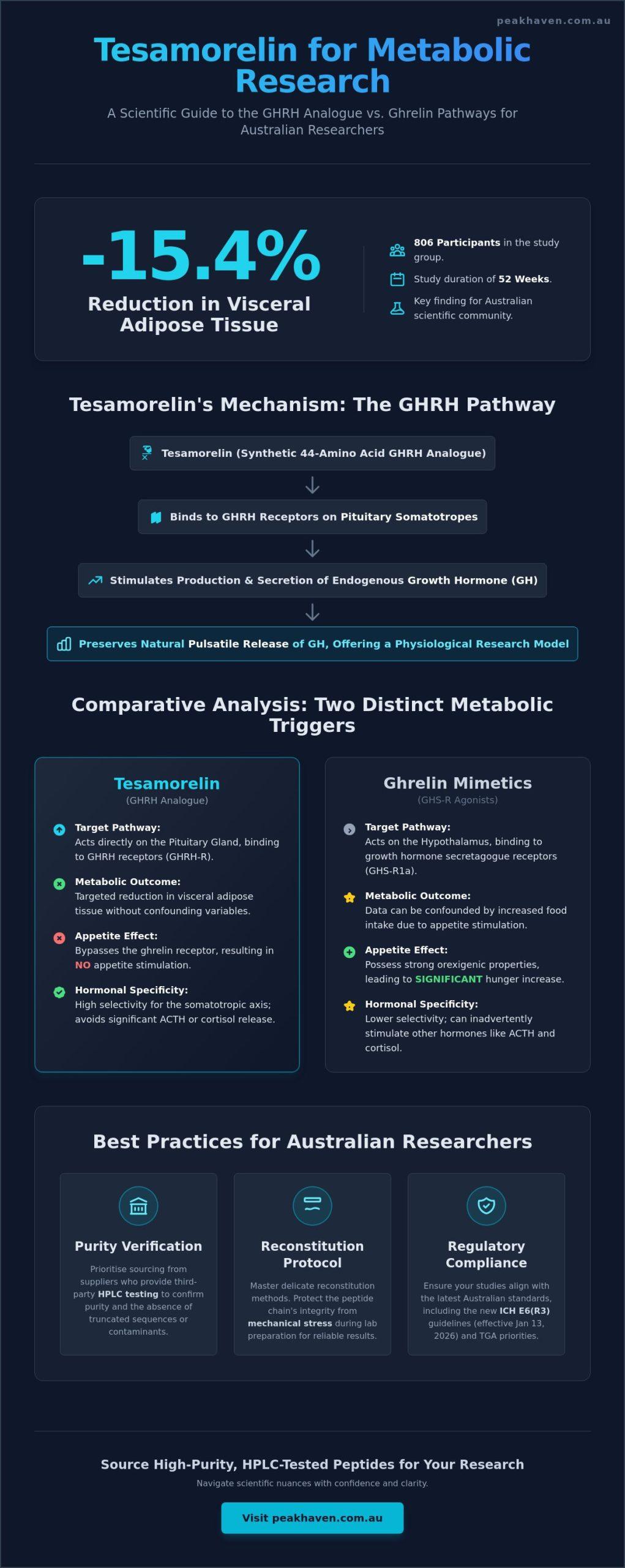
A study involving 806 participants over 52 weeks revealed that tesamorelin resulted in a 15.4% reduction in visceral adipose tissue, a finding that has sparked significant interest across the Australian scientific community. You’re likely aware of the complexities involved in metabolic studies, particularly the frequent confusion between GHRH analogues and ghrelin receptor pathways. Searching for high purity tesamorelin for ghrelin research often leads to more questions than answers, especially regarding reconstitution protocols and sourcing reliable, HPLC tested compounds within our local landscape.
We’re here to help you navigate these scientific nuances with confidence and clarity. This guide clarifies the distinct mechanisms of Tesamorelin as a GHRH analogue and how it differentiates from ghrelin pathways in metabolic research. We’ll also dive into the practicalities of laboratory handling under the new ICH E6(R3) clinical trial guidelines that became effective on January 13, 2026. By the end of this article, you’ll have a clear understanding of Tesamorelin’s role in growth hormone secretion and a steady path toward sourcing research grade materials that meet the highest Australian standards.
Key Takeaways
- Understand the precise mechanism of Tesamorelin as a synthetic 44-amino acid analogue that specifically targets pituitary somatotropes to stimulate growth hormone release.
- Differentiate signaling pathways between pituitary GHRH-R and hypothalamic GHS-R1a to refine your scientific focus when utilizing tesamorelin for ghrelin research.
- Master the delicate reconstitution protocols required for sensitive analogues, ensuring you protect the integrity of the peptide chain from mechanical stress during laboratory preparation.
- Identify high-purity research peptides in Australia by prioritizing third-party HPLC testing to confirm the absence of truncated sequences or unwanted contaminants.
- Navigate the 2026 regulatory landscape and TGA compliance priorities to ensure your laboratory studies remain aligned with the latest Australian standards.
Tesamorelin as a GHRH Analogue in Growth Hormone Research
Tesamorelin stands as a sophisticated synthetic 44-amino acid analogue of human growth hormone-releasing hormone (GHRH). In the evolving landscape of 2026 metabolic studies, it has become a cornerstone for investigating growth hormone dynamics. You’ll often find tesamorelin for ghrelin research mentioned in academic circles. This is frequently due to the overlapping goals of studying lipid metabolism, though the two substances operate through entirely different cellular gateways.
As a pharmaceutical grade peptide, Tesamorelin is engineered for high specificity. It functions by binding to and activating GHRH receptors located on pituitary somatotropes. This interaction mimics the natural signaling process, stimulating the production and secretion of endogenous growth hormone. By preserving the natural pulsatile nature of GH release, it provides a more physiological model for laboratory observation than direct GH administration. Researchers who buy tesamorelin 10mg for their projects often value this preservation of the somatotropic feedback loop.
To better understand this concept, watch this helpful video:
The Molecular Structure of Tesamorelin 10mg
The structural integrity of this analogue is enhanced by a hexenoyl group attached to its N-terminal tyrosine. This modification is crucial because it protects the peptide from rapid enzymatic degradation by dipeptidyl peptidase IV. While endogenous GHRH has a very short half-life in vitro, Tesamorelin remains stable for much longer, allowing for extended observation periods in cellular cultures. The molecular weight of Tesamorelin is approximately 5135.9 Daltons, which serves as a fundamental constant for scientists performing precise stoichiometric calculations in bench research.
Why Researchers Distinguish GHRH from Ghrelin
It’s essential to distinguish between GHRH analogues and ghrelin receptor agonists. GHRH acts as a direct pituitary stimulant. In contrast, ghrelin is a stomach-derived peptide that binds to the growth hormone secretagogue receptor (GHS-R1a) in the hypothalamus. While these two pathways are synergistic in maintaining GH pulsatility, they produce different secondary effects. Ghrelin mimetics often trigger significant appetite stimulation through orexigenic pathways. Because Tesamorelin bypasses the ghrelin receptor entirely, it allows you to isolate the effects of GH on adipose tissue without the confounding variable of increased caloric intake. This specificity makes it an invaluable tool for focused metabolic research.
Comparative Analysis: Tesamorelin vs. Ghrelin Receptor Agonists
Scientists often contrast GHRH analogues with ghrelin receptor agonists to understand different metabolic triggers. While ghrelin mimetics target the hypothalamic GHS-R1a receptor, Tesamorelin focuses exclusively on the pituitary GHRH-R. This distinction is vital in tesamorelin for ghrelin research because it defines the secondary physiological outcomes of the study. For instance, many ghrelin agonists can inadvertently stimulate the release of ACTH and cortisol, whereas Tesamorelin maintains a more selective profile. Researchers who utilize Tesamorelin 10mg as a primary subject can observe growth hormone elevation without these additional hormonal spikes, providing a clearer view of the somatotropic axis.
Metabolic Research Outcomes: Adipose Tissue vs. Appetite
One of the most striking differences lies in appetite regulation. Traditional ghrelin mimetics are known for their orexigenic properties, which frequently increase food intake in test subjects. Tesamorelin doesn’t activate the ghrelin receptor, meaning it doesn’t trigger hunger. This lack of appetite stimulation allows for a cleaner data set when studying visceral adipose tissue (VAT). Research indicates that Tesamorelin can achieve a 15.4% reduction in VAT without the confounding variable of increased caloric consumption. For those designing comprehensive laboratory trials, incorporating this peptide into The Ultimate Cut Protocol provides a robust framework for investigating lipid oxidation. Reviewing Tesamorelin Injection information reveals how its specific action on fat cells differs from broader, less targeted metabolic interventions.
IGF-1 Modulation in Secretagogue Studies
The modulation of Insulin-like Growth Factor 1 (IGF-1) is a primary metric in secretagogue research. Unlike exogenous growth hormone, which can cause IGF-1 levels to spike significantly, GHRH analogues like Tesamorelin are subject to natural negative feedback loops. When IGF-1 levels rise, the body releases somatostatin, which naturally inhibits further GH production. This ceiling effect ensures that IGF-1 remains within a more physiological range during prolonged studies. Published data shows that while IGF-1 increases by approximately 33% from baseline in clinical models, it typically plateaus rather than climbing indefinitely. This stability makes tesamorelin for ghrelin research a reliable tool for long-term observation. If you’re looking to enhance your laboratory’s precision, you can buy Tesamorelin 10mg to ensure your study benefits from the highest purity standards available in Australia.
Best Practices for Tesamorelin Reconstitution and Stability
Ensuring the integrity of your research begins long before the first observation. When you’re utilizing tesamorelin for ghrelin research, the physical handling of the compound is just as critical as your experimental design. This 44-amino acid chain is notably sensitive to mechanical stress. Unlike smaller peptides, Tesamorelin can easily undergo denaturation if subjected to vigorous agitation or rapid pressure changes. Maintaining a sterile laboratory environment during every stage of handling isn’t just a safety requirement; it’s a necessity for data accuracy and reproducible results.
Using Bacteriostatic Water is the industry standard for multi-use research vials. The 0.9% benzyl alcohol serves as a preservative, effectively inhibiting microbial growth that could otherwise compromise the peptide’s purity. For scientists who prioritize precision, sourcing pharmaceutical grade peptides ensures that the starting material is free from truncated sequences or residual solvents before reconstitution even begins.
Reconstitution Protocol for Tesamorelin Research
To preserve the peptide’s delicate structure, follow a precise protocol. For a 10mg vial of lyophilized powder, we recommend using 2mL of bacteriostatic water. This ratio provides a clear concentration of 5mg/mL, which simplifies stoichiometric calculations during bench work. Always use the ‘slow drip’ method by aiming the needle at the glass wall of the vial. Let the diluent trickle down slowly rather than spraying it directly onto the powder. This prevents foaming and ensures the peptide dissolves through gentle diffusion. If you need to restock your lab with essential supplies, you can buy bacteriostatic water directly from our Australian-based store.
Storage and Long-Term Stability for Australian Labs
Stability is highly temperature-dependent. In its lyophilized state, Tesamorelin should be stored at -20?C to ensure a shelf life of up to 24 months. Once reconstituted, the vial must be kept in a laboratory fridge at 2-8?C. Exposure to light can also trigger degradation; therefore, vials should remain in their original packaging or be stored in an amber container. Reconstituted Tesamorelin typically maintains its stability and potency for approximately 21 days when stored correctly in a controlled laboratory refrigerator.
If you’re ready to begin your next study, you can buy research peptides Australia and explore our full range of laboratory supplies at peakhaven.com.au.
Sourcing HPLC-Tested Peptides for Australian Research
Procuring reliable compounds is often the most stressful part of a scientist’s journey. When you’re conducting tesamorelin for ghrelin research, the validity of your data rests entirely on the purity of your starting material. Even minor contaminants or truncated sequences can lead to skewed metabolic results, wasting months of careful observation. We understand that you need more than just a supplier; you need a steady hand and a partner who values laboratory transparency as much as you do.
Peak Haven is committed to providing pharmaceutical grade peptides that meet the rigorous demands of the 2026 Australian research environment. By choosing a domestic source, you avoid the unpredictability of international customs and the risk of temperature fluctuations during long-haul transit. We prioritize your agency and choice, ensuring that every compound we offer is backed by rigorous verification processes. This local reliability acts as a bridge between your goals and the high-quality resources required to achieve them.
The Importance of Third-Party HPLC Purity Testing
High-Performance Liquid Chromatography (HPLC) is our primary tool for ensuring excellence. For the non-expert researcher, think of HPLC as a molecular sieve that separates a substance into its individual components. It allows us to confirm that the peptide you receive is exactly what’s on the label, without any unwanted by-products. Achieving 99%+ purity is essential for valid metabolic research data, as even a 1% deviation can introduce variables that interfere with GHRH receptor signaling. We provide verified testing for all our batches, including high-demand compounds like Retatrutide 20mg.
Express Shipping and Logistics for National Research
Time is a precious resource in any lab. Our Australia-wide express shipping ensures that your time-sensitive studies aren’t delayed by bureaucratic hurdles or border closures. We use secure, temperature-monitored packaging to protect the structural integrity of your peptides from the moment they leave our facility until they reach your bench. This local approach eliminates the stress of 2026 regulatory changes at the border, giving you more control over your project’s timeline. Whether you’re working on a standalone study or a broader framework like The Peak Protocol, we’re here to support your progress every step of the way.
Explore our full range of high-purity research compounds and laboratory supplies at peakhaven.com.au to find the right tools for your next breakthrough.
Advancing Your Metabolic Research Horizons
The landscape of growth hormone studies is shifting, and having the right tools makes all the difference. By distinguishing the pituitary-specific action of Tesamorelin from hypothalamic ghrelin agonists, you gain precise control over your laboratory variables. We’ve explored how a 15.4% reduction in visceral adipose tissue can be observed without the confounding effects of appetite stimulation. This clarity is essential when utilizing tesamorelin for ghrelin research to map out metabolic pathways under the latest 2026 TGA guidelines.
Your success depends on the integrity of your compounds and the reliability of your handling protocols. Protecting the delicate 44-amino acid chain during reconstitution ensures that your data remains valid and reproducible. Peak Haven is here to serve as your steady partner in this journey. We provide third-party HPLC purity verification and offer Australia-wide express shipping to keep your project on track. All our products are strictly for laboratory research use, providing you with the high-purity tools needed for your next breakthrough.
Explore our HPLC-tested Tesamorelin for your next research project at Peak Haven
We look forward to supporting your scientific goals and helping you achieve the highest potential in your laboratory work.
Frequently Asked Questions
Is Tesamorelin a ghrelin receptor agonist?
No, it’s a GHRH (Growth Hormone Releasing Hormone) analogue rather than a ghrelin receptor agonist. While ghrelin mimetics target the GHS-R1a receptor, Tesamorelin specifically binds to GHRH receptors on pituitary somatotropes. This distinction is vital for scientists using tesamorelin for ghrelin research. It allows you to stimulate growth hormone release without the appetite-stimulating effects associated with the ghrelin pathway, ensuring a more focused metabolic study.
What is the primary research application for Tesamorelin 10mg?
The primary application is the study of visceral adipose tissue (VAT) reduction and growth hormone deficiency models. Research conducted in 2026 continues to build on clinical data showing a 15.4% reduction in VAT over a 52-week period. Scientists often use Tesamorelin 10mg to investigate lipid metabolism and IGF-1 feedback loops without the confounding variables of increased hunger or altered caloric intake.
How should Tesamorelin be stored in a laboratory setting?
Lyophilized Tesamorelin should be kept at -20?C for long-term stability, while reconstituted vials require refrigeration at 2-8?C. Protecting the vial from light is also essential to prevent peptide degradation. Once reconstituted with bacteriostatic water, the compound typically maintains its structural integrity for approximately 21 days in a controlled laboratory fridge. Proper storage is crucial for maintaining the precision of your research data.
Can Tesamorelin be combined with other peptides for research?
Yes, it’s frequently used in multi-peptide research frameworks to study synergistic effects on metabolism and tissue composition. For example, researchers might investigate its role within The Ultimate Cut Protocol to analyze fat oxidation pathways. These combinations allow for a broader analysis of the somatotropic axis while maintaining the high standards required for tesamorelin for ghrelin research in complex biological models.
Does Peak Haven provide HPLC testing for its research peptides?
Peak Haven provides third-party HPLC purity verification for every batch of research peptides we supply. We believe transparency is the foundation of scientific trust. By offering HPLC tested peptides Australia, we ensure your laboratory receives compounds with 99%+ purity. This rigorous testing eliminates the risk of truncated sequences or residual solvents that could compromise your study’s results or lead to inconsistent data.
What is the difference between GHRH and GHRP in secretagogue research?
GHRH analogues like Tesamorelin mimic the body’s natural signaling hormone to the pituitary gland. In contrast, GHRPs (Growth Hormone Releasing Peptides) are ghrelin mimetics that act on the GHS-R1a receptor. While both stimulate GH release, GHRH analogues provide a more physiological pulse. GHRPs often lead to larger spikes and can sometimes increase prolactin or cortisol levels, which might introduce unwanted variables into your experimental research model.

Disclaimer
The products discussed in this article are intended strictly for laboratory and research purposes only. They are not intended for human consumption, therapeutic use, or as dietary supplements. Nothing in this article should be interpreted as medical advice, a diagnosis, or a recommendation for treatment. Always consult a qualified healthcare professional for any medical concerns.
Peak Haven supplies research-grade peptides exclusively for scientific and clinical research use. All products undergo independent third-party HPLC testing to verify purity and composition. By purchasing from Peak Haven, you confirm that products will be used solely for legitimate research purposes in accordance with all applicable Australian laws and regulations.
The information presented in this article is based on published scientific literature and is provided for educational purposes only. Peak Haven makes no claims regarding the efficacy or safety of any compound for human use. Individual research results may vary. References to studies or research findings do not constitute endorsement of any specific application.