
Long-Term Peptide Storage Temperature: A 2026 Research Stability Guide
By Peak Haven12 min read
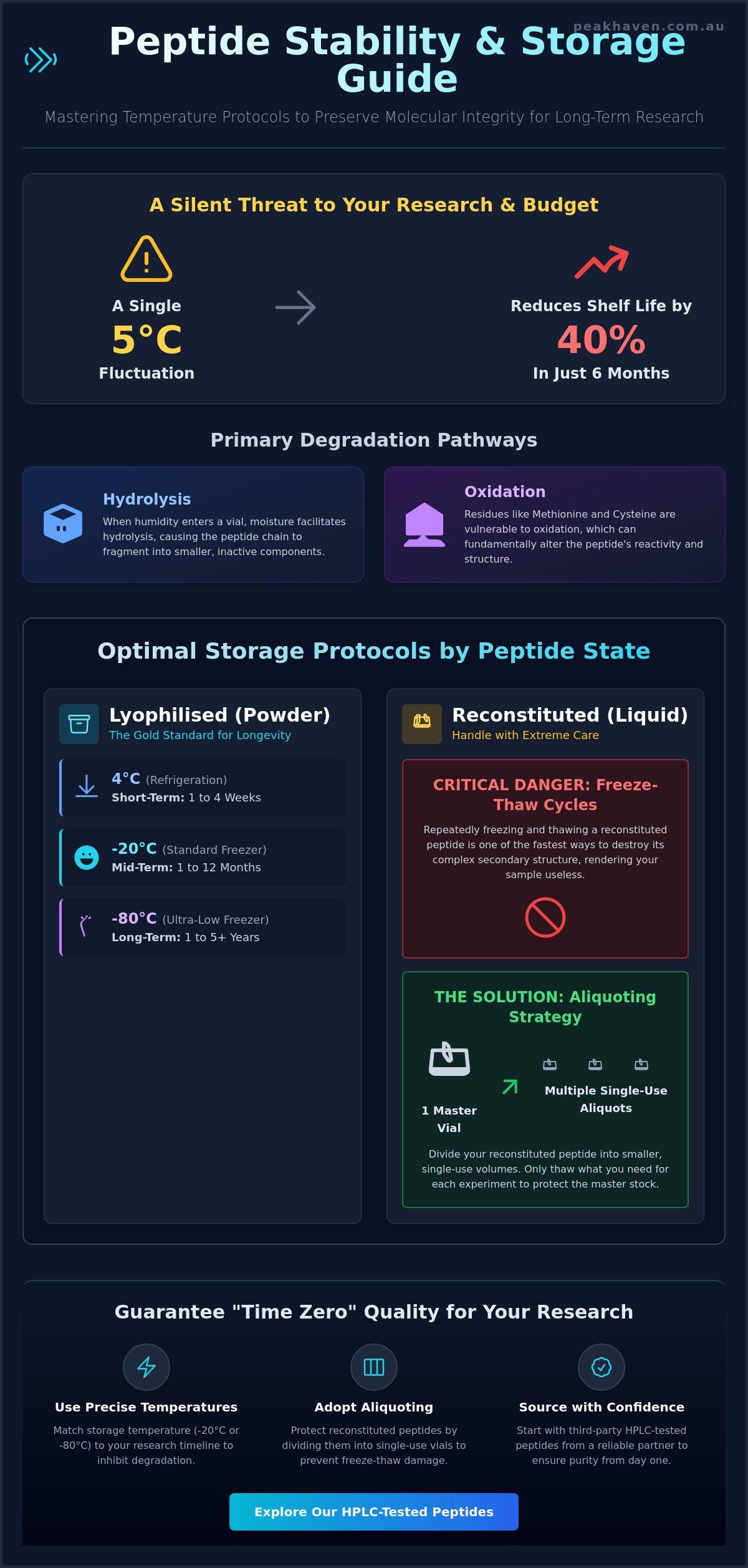
Did you know that a single 5-degree fluctuation in your lab environment can reduce the shelf life of a lyophilised compound by up to 40 percent in just six months? It’s a silent threat to your budget and your data. We understand the stress of managing high-value assets, especially when the high cost of replacing degraded research peptides Australia can set your project back by thousands of dollars. You’ve likely experienced the confusion of balancing different requirements for powder and liquid states, worrying if your current long-term peptide storage temperature is truly protecting your investment.
At Peak Haven, we’re your dedicated allies in scientific excellence. We’ve developed this 2026 stability guide to help you master the precise temperature protocols and environmental controls required to preserve molecular integrity for long-term clinical and laboratory studies. We’ll walk you through the specific science of why certain temperatures prevent breakdown and how to implement a definitive protocol for every stage of your work. This collaborative journey toward better data starts with understanding our HPLC tested peptides Australia range, giving you the choice and control to ensure total compound purity from the moment your order arrives via our reliable Australian-based shipping.
Key Takeaways
- Understand how environmental stressors like hydrolysis and oxidation can compromise your research data by breaking down delicate amino acid chains over time.
- Learn the critical differences in handling lyophilised versus reconstituted compounds to ensure your laboratory samples remain viable for the duration of your study.
- Master the precise long-term peptide storage temperature requirements, including why -20?C or -80?C is essential for maintaining molecular integrity.
- Discover practical “Aliquoting Strategies” tailored for Australian researchers to protect your high-purity peptides from the damaging effects of repeated freeze-thaw cycles.
- Recognise why starting with third-party HPLC-tested peptides from a reliable Australian partner is the only way to guarantee “Time Zero” quality for your research journey.
The Science of Peptide Stability: Why Temperature Matters
Peptides are short chains of amino acids held together by peptide bonds. These bonds are the foundation of your laboratory work, yet they remain inherently sensitive to environmental stressors. At Peak Haven, we understand that maintaining the integrity of these molecules is vital for reproducible results. The Science of Peptide Stability reveals that even minor fluctuations in the environment can trigger irreversible changes in a sample’s chemical composition. For Australian researchers, managing the long-term peptide storage temperature is the first step in protecting the viability of high-purity sequences.
To better understand this concept, watch this helpful video:
In a professional laboratory context, “long-term” refers to any storage duration exceeding 90 days for lyophilised (freeze-dried) samples. When stored at room temperature, thermodynamic energy provides the catalyst for side-chain reactions. This energy accelerates the degradation pathways that compromise the molecular structure. Without strict climate control, the long-term peptide storage temperature becomes a liability rather than a safeguard for your research materials.
Molecular Vulnerabilities: Oxidation and Hydrolysis
Chemical degradation often occurs through oxidation and hydrolysis. Residues like Methionine and Cysteine are particularly vulnerable to oxidation, which can fundamentally alter the peptide’s reactivity. When humidity enters a vial, moisture facilitates hydrolysis, causing the peptide chain to fragment into smaller, inactive components. Maintaining a consistent, sub-zero temperature acts as a kinetic inhibitor that significantly slows the velocity of these degradative chemical reactions.
The Impact of Secondary Structure on Longevity
The complexity of a peptide sequence directly dictates its storage requirements. Simple di-peptides are relatively robust, but complex sequences with 30 or more amino acids, such as retatrutide 20mg, demand much stricter thermal management. As sequence length increases, so does the probability of unwanted conformational changes. We prioritize third-party HPLC testing for all our products to ensure that your mots-c 10mg or other research items maintain their purity after transit and storage. Verifying stability through HPLC testing is the only way to guarantee that your pharmaceutical-grade peptides haven’t succumbed to structural shifts over time.
Optimal Temperature Protocols for Lyophilised vs. Reconstituted Peptides
Peptides exist in two primary states in the laboratory: the stable lyophilised powder and the delicate reconstituted solution. Understanding the long-term peptide storage temperature requirements for each is vital to ensure your research data remains accurate and reproducible. The physical state of the compound dictates how it interacts with its environment, making temperature control your most important variable in preventing peptide degradation.
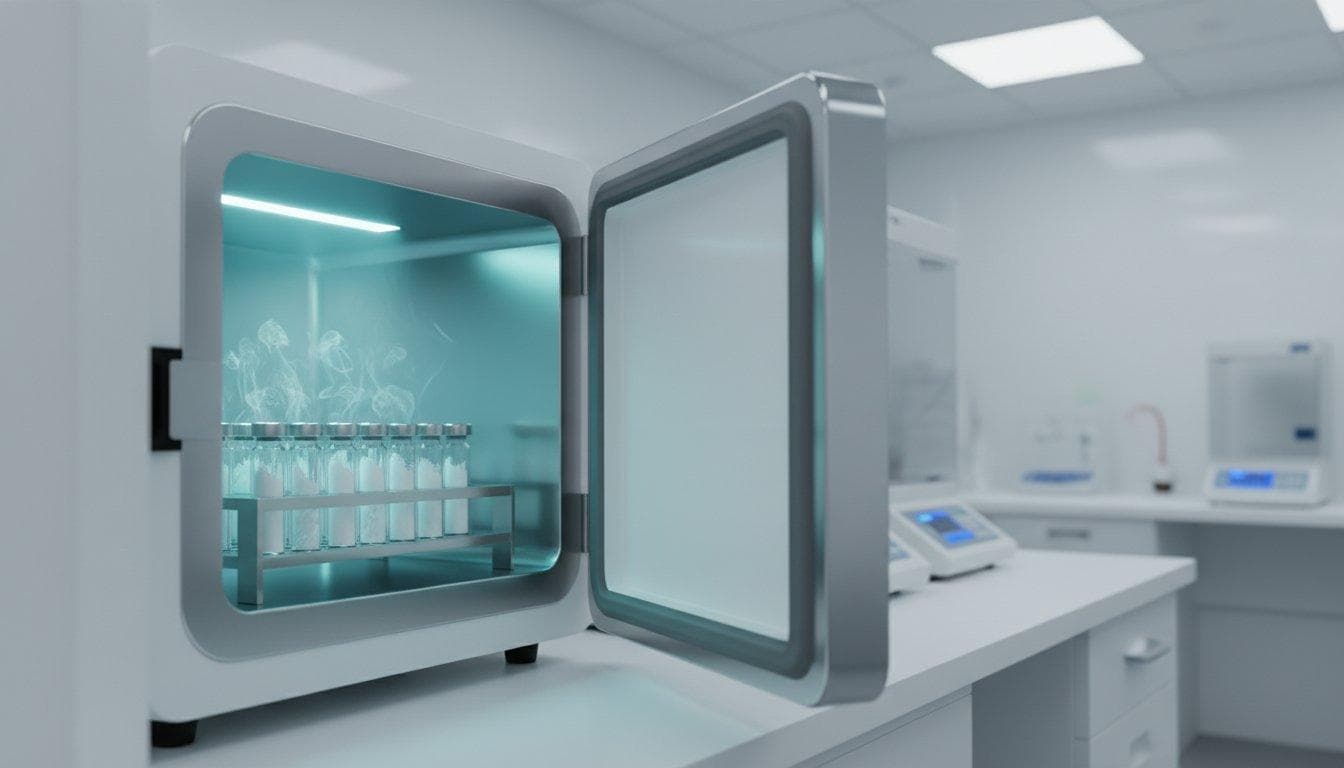
The stability of your compounds depends heavily on the intended duration of storage. For short-term research continuity lasting 1 to 4 weeks, refrigeration at 4?C is typically acceptable for dry vials. When your project timeline extends to 1 to 12 months, a standard laboratory freezer set to -20?C becomes the necessary protocol to halt most enzymatic activity. For critical samples requiring preservation for 1 to 5 years, an ultra-low temperature freezer at -80?C is required to prevent the gradual breakdown of the peptide’s primary structure.
Lyophilised Powder: The Gold Standard for Longevity
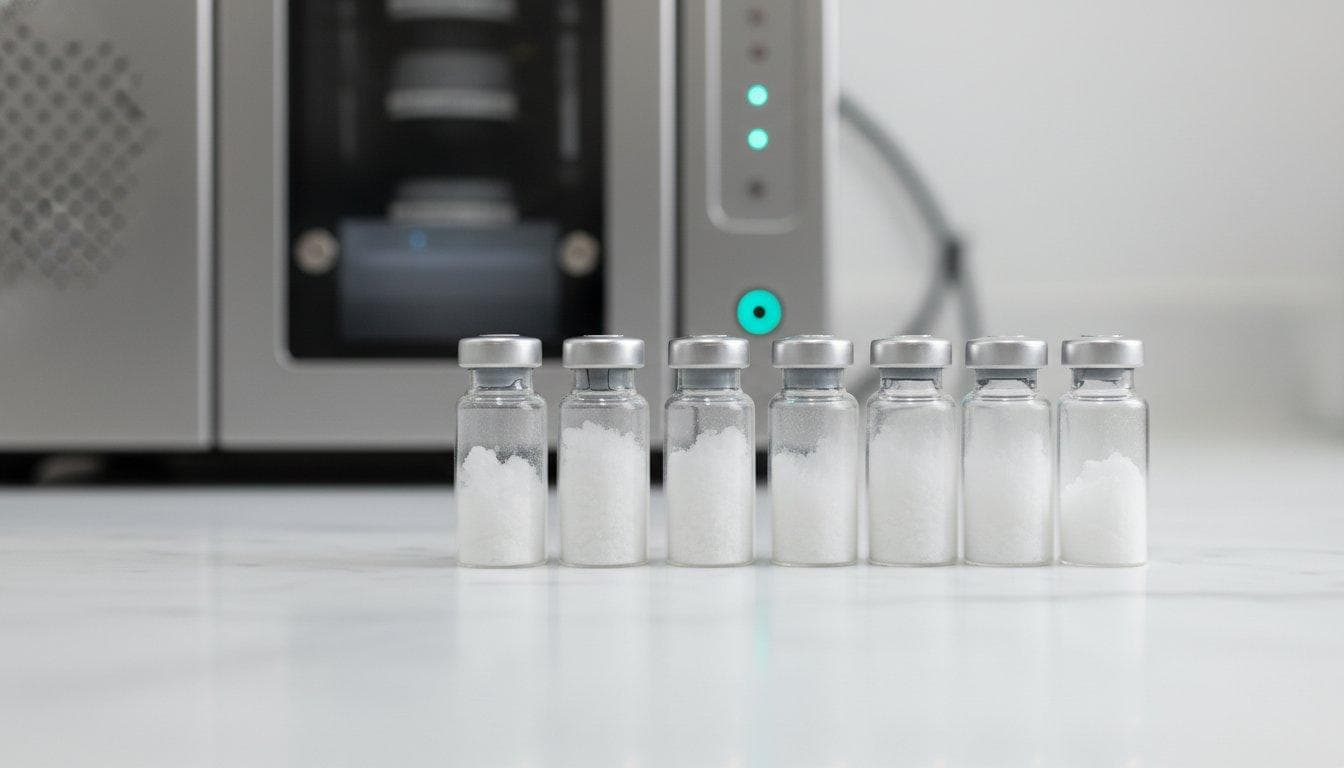
Freeze-drying, or lyophilisation, removes the primary catalyst for degradation: water. Storing high-purity compounds like Retatrutide 20mg in their original vacuum-sealed vials provides the best protection against environmental moisture and oxidation. You should always allow vials to reach room temperature before opening them. This “warm-up” protocol prevents atmospheric moisture from condensing on the cold powder, which could trigger immediate hydrolysis. Peak Haven ensures all vials are HPLC tested for purity before they leave our Australian facility, giving your team a reliable baseline for stability studies.
Reconstituted Stability and the Role of Bacteriostatic Water
Once you introduce a solvent, the peptide’s half-life drops significantly. Using Bacteriostatic Water is essential because its 0.9% benzyl alcohol content inhibits microbial growth, extending liquid stability for up to 28 days when kept at 2-8?C. According to the NIBSC peptide storage protocols, avoiding repeated freeze-thaw cycles is critical for maintaining molecular integrity. Freezing reconstituted peptides is generally discouraged; the formation of ice crystals can shear the delicate peptide bonds and lead to aggregation or irreversible denaturation.
If you’re planning an extended study, it’s best to aliquot your samples into single-use doses before any initial freezing to maintain the highest possible long-term peptide storage temperature stability. You can explore our full range of research compounds to find the right high-purity options for your next laboratory project.
Practical Handling and Environmental Control in Australian Labs
Managing research materials in the Australian climate requires a proactive approach to environmental variables. High ambient temperatures in cities like Brisbane or Perth can quickly compromise delicate sequences if the long-term peptide storage temperature isn’t strictly maintained. Precision in handling is just as vital as the initial storage conditions. Beyond simple refrigeration, researchers must account for light exposure and mechanical stress that occurs during routine lab activity.
The Aliquoting Protocol for Multi-Month Studies
Dividing a large bulk sample into single-use research doses is the most effective way to preserve your materials over time. This strategy prevents the destructive cycle of repeatedly warming and cooling the entire stock. Studies indicate that each freeze-thaw cycle can result in a 5% to 10% loss of peptide potency due to ice crystal formation and molecular shearing. To implement this protocol effectively, follow these steps:
- Calculate the exact mass required for a single experimental session.
- Dissolve the bulk peptide in a suitable buffer or use the dry powder to divide into smaller vials.
- Use low-protein binding polypropylene tubes to prevent the peptide from adhering to the plastic walls.
- Flash-freeze the aliquots and return them to the long-term peptide storage temperature of -20?C or -80?C immediately.
Australian Shipping and the Cold Chain
Peak Haven manages express shipping from dedicated hubs in Melbourne and Sydney to maintain the integrity of every order. We understand that the Australian heat poses a unique challenge for domestic logistics. Fortunately, lyophilised peptides are remarkably resilient to short-term ambient temperature fluctuations during transit. These freeze-dried cakes remain stable for several days at room temperature, provided they’re kept away from direct sunlight. Once your shipment arrives, it’s vital to transition the vials to a stable cooling environment. For detailed steps on preparing your samples after transit, you can refer to our guide on Bacteriostatic Water and reconstitution techniques.
Environmental factors like UV light can be as detrimental as heat. Certain peptide sequences are prone to photolytic degradation, where light energy breaks down chemical bonds. Always store your vials in opaque boxes or foil-wrapped containers. Furthermore, be aware of “hot spots” in standard lab freezers. Avoid storing samples in the door or near the cooling elements of auto-defrost units, as these areas experience frequent temperature spikes. Using a digital thermometer with a min-max log helps ensure your samples stay within the required range throughout the study.
Protect your research outcomes by sourcing from a provider that prioritises stability and purity. Explore our full range of pharmaceutical grade peptides and laboratory supplies today.
Sourcing High-Purity Peptides for Reliable Long-Term Research
Maintaining the ideal long-term peptide storage temperature is a wasted effort if the initial compound lacks pharmaceutical-grade purity. Degradation often begins before a vial ever reaches your laboratory freezer. If a sample contains residual moisture or salts from an incomplete lyophilization process, these contaminants accelerate chemical breakdown even at -20?C. You can’t preserve what’s already compromised; starting with a verified “Time Zero” baseline is the only way to ensure your longitudinal data remains valid.
Peak Haven functions as a dedicated ally for the Australian scientific community, providing the structural clarity needed to navigate complex procurement. We recommend every laboratory establish a strict SOP for new arrivals. This includes a visual inspection of the lyophilized cake, verification of the vacuum seal, and immediate logging of batch numbers against third-party certificates. Transferring vials to deep-freeze storage within minutes of delivery prevents the cumulative thermal stress that often occurs during domestic transit.
Verifying Purity with HPLC Testing
A High-Performance Liquid Chromatography (HPLC) report acts as a molecular fingerprint for your research materials. When you review these documents, focus on the “Area %” of the primary peak. For high-stakes research, you should demand a purity of 98% or higher. Sourcing from providers that offer batch-specific transparency ensures you aren’t relying on generic data sheets. This precision is vital for complex sequences like the BPC-157 + TB-500 Blend, where two distinct peptide chains must maintain their individual integrity without cross-reacting during storage.
Building Your Research Inventory with Peak Haven
Peak Haven streamlines the path to discovery by offering a robust catalog of HPLC-tested compounds. Whether your project requires GHK-Cu 100mg for cellular signaling studies or advanced metabolic research stacks, our Australian-based logistics provide a significant advantage. International shipping often exposes peptides to fluctuating temperatures for 10 to 14 days. By choosing local distribution, you reduce transit time to just 2 or 3 days, significantly lowering the risk of heat-induced degradation before the long-term peptide storage temperature protocols begin.
Our team is committed to your success, acting as a bridge between high-tier manufacturing and your laboratory bench. We prioritize your agency by providing the data you need to make informed decisions about your research inventory. Explore the full range of pharmaceutical-grade, HPLC-tested peptides at peakhaven.com.au and secure the reliability of your next study.
Securing Your Research Integrity Through Temperature Control
Maintaining the integrity of your study requires more than just high-purity compounds; it demands a rigorous approach to environmental variables. Research from 2024 stability trials confirms that lyophilised powders remain viable for years when held at -20?C, while reconstituted solutions degrade rapidly even at refrigerated temperatures. Your choice of long-term peptide storage temperature acts as a safeguard for your data, preventing the hydrolytic degradation that can compromise experimental outcomes. By implementing precise cooling protocols and using specialised laboratory-grade supplies like bacteriostatic water, you ensure your work remains consistent and reproducible.
We understand that the success of your project depends on the reliability of your materials. Every batch we provide undergoes third-party HPLC purity verification to ensure it meets strict laboratory standards. We ship directly from Melbourne and Sydney via fast Australia-wide express post, so your research compounds spend less time in transit and more time in controlled storage. We’re here to support your scientific journey with the tools and transparency you need to reach your goals.
Secure your high-purity research compounds at Peak Haven and take the next step toward discovery with confidence.
Frequently Asked Questions
Can I store research peptides in a regular kitchen freezer?
You shouldn’t store research peptides in a standard kitchen freezer because the automatic defrost cycles cause frequent temperature fluctuations. These cycles can swing the internal temperature by 10 degrees Celsius or more, which leads to moisture condensation and peptide degradation. For researchers who want to protect their samples, a dedicated manual-defrost laboratory freezer set to -20?C provides a more stable environment for your scientific journey.
How long do peptides last at room temperature during laboratory benchwork?
Lyophilized research peptides Australia can typically remain stable at room temperature for 7 to 14 days without a measurable loss of integrity. However, once you reconstitute the powder into a liquid state, the stability window narrows to just 2 to 4 hours on the bench. We recommend keeping vials on ice during active experimentation to empower your team with the most accurate and reliable data possible.
Is it better to store peptides as a powder or a liquid for long-term studies?
It’s significantly better to store peptides as a lyophilized powder to maintain the ideal long-term peptide storage temperature over several years. Powdered samples remain stable for 24 to 60 months when kept at -20?C, whereas liquid solutions often show a 10% degradation rate within just 30 days of refrigeration. Choosing the powdered format for your long-term archives ensures you have total choice and control over the quality of your research materials.
What happens to the peptide structure if it accidentally freezes after reconstitution?
Accidental freezing after reconstitution often causes peptide shearing, where the formation of ice crystals physically breaks the delicate molecular bonds. This process can reduce the biological activity of your BPC-157 research samples by approximately 15% to 20% during a single freeze-thaw cycle. We suggest storing reconstituted vials in the coldest part of a standard refrigerator at 2?C to 8?C to avoid this structural damage.
Does light exposure affect the storage temperature requirements of peptides?
Yes, light exposure triggers photo-oxidation in amino acids like tryptophan and tyrosine, which can compromise your results even if the temperature is correct. Studies indicate that 24 hours of direct UV light exposure can reduce peptide purity by 8% to 12% at the cellular level. We recommend using amber vials or opaque storage boxes to act as a safe haven for your samples, shielding them from environmental stressors during your study.
How do I know if my peptide has degraded during storage?
You can often identify degradation by visual changes such as cloudiness, discolouration, or the presence of insoluble particulates after reconstitution. Because we value transparency and your research success, Peak Haven provides HPLC tested peptides Australia to ensure a minimum of 99% purity before any shipment leaves our facility. If a lyophilized powder appears clumpy or yellowish, it has likely absorbed moisture, which signals a breach in its structural stability.
To ensure your laboratory has access to the highest quality materials for your next project, explore the full range of purity-tested options at peakhaven.com.au.

Article by
Peak Haven Research Team
Peak Haven is Australia’s leading supplier of high-purity research peptides, verified through independent third-party HPLC testing. Based in Australia with fast nationwide shipping.
Disclaimer
The products discussed in this article are intended strictly for laboratory and research purposes only. They are not intended for human consumption, therapeutic use, or as dietary supplements. Nothing in this article should be interpreted as medical advice, a diagnosis, or a recommendation for treatment. Always consult a qualified healthcare professional for any medical concerns.
Peak Haven supplies research-grade peptides exclusively for scientific and clinical research use. All products undergo independent third-party HPLC testing to verify purity and composition. By purchasing from Peak Haven, you confirm that products will be used solely for legitimate research purposes in accordance with all applicable Australian laws and regulations.
The information presented in this article is based on published scientific literature and is provided for educational purposes only. Peak Haven makes no claims regarding the efficacy or safety of any compound for human use. Individual research results may vary. References to studies or research findings do not constitute endorsement of any specific application.