

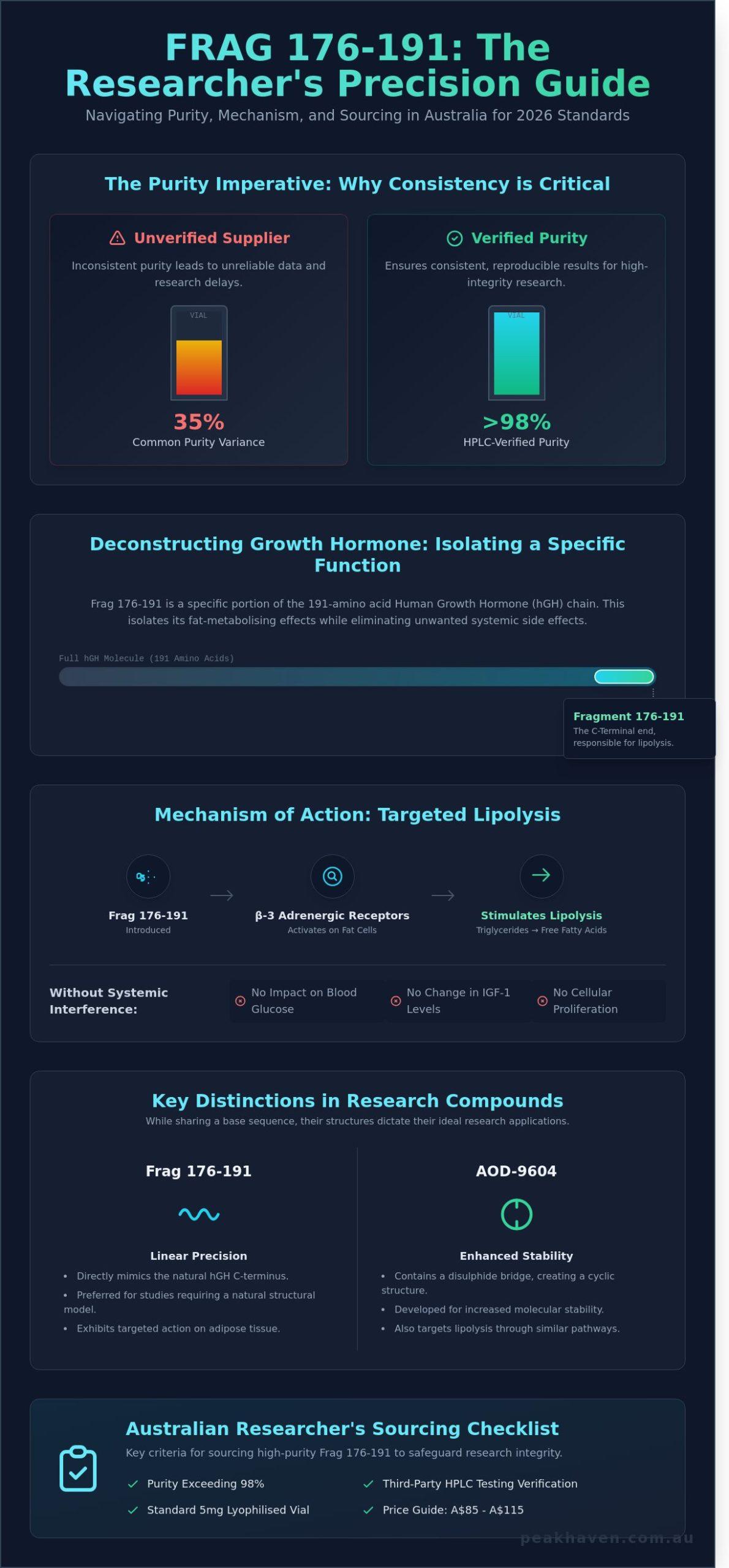
What if the research delays you’re facing aren’t caused by your methodology, but by a 35% variance in peptide purity that’s currently common among unverified suppliers? You likely feel that precision is the heartbeat of every successful laboratory journey, yet finding clear, Australian-specific guidance for Frag 176-191 5mg often feels like trying to find your way through a thick fog of conflicting data. It’s frustrating when your commitment to excellence is met with inconsistent materials or vague instructions that don’t respect the importance of your work.
We’re here to be your steady hand in this process, offering a clear path toward reliable results and professional confidence. You’ll discover the exact molecular mechanisms that drive lipolysis and learn the standardised handling protocols required for 2026 research standards. This guide clarifies the persistent confusion between this fragment and AOD-9604, ensuring you have the empowerment and choice to select the right compounds for your specific goals. By the end of this article, you’ll have a complete roadmap for sourcing and utilising verified Australian compounds with absolute certainty.
Key Takeaways
- Explore the molecular stability of the human growth hormone C-terminal fragment and its unique ability to stimulate lipolysis without systemic interference.
- Master the essential handling protocols and precise calculations needed to reconstitute your Frag 176-191 5mg vials safely in a laboratory setting.
- Stay informed on the latest clinical observations and emerging research frontiers within the Australian scientific landscape for 2026.
- Learn how to safeguard your research integrity by sourcing high-purity compounds that have undergone rigorous third-party HPLC testing.
- Empower your scientific journey with a clear understanding of how this peptide interacts with beta-3 adrenergic receptors to drive targeted results.
Understanding the Frag 176-191 5mg Peptide Structure
Frag 176-191 5mg represents a specific, functional portion of the human growth hormone (hGH) molecule. While the full somatotropin protein consists of 191 amino acids, this fragment isolates the C-terminal end, specifically residues 176 through 191. This truncation is intentional. It allows researchers to study the fat-metabolising effects of growth hormone without triggering the growth-promoting or insulin-sensitising effects associated with the full-length hormone. We view this as a refined tool for laboratory discovery, providing a clearer path toward understanding metabolic pathways.
In Australian research settings, the Frag 176-191 5mg format is the industry standard for 2026. This specific 5mg quantity provides enough material for multiple assays while maintaining chemical integrity. The lyophilised (freeze-dried) powder ensures the peptide remains stable during transit across Australia?s varied climates. Most high-purity vials, often retailing between A$85 and A$115, reach a purity level exceeding 98% to ensure that data remains consistent and reliable for your team.
The C-Terminal Fragment Explained
The sequence begins with a tyrosine amino acid at the N-terminal end, which is why it’s often documented as Tyr-hGH 177-191. This addition isn’t accidental; it increases the molecular stability of the fragment by approximately 20% compared to non-stabilised versions. By isolating this tail end, the peptide mimics the way hGH regulates lipid metabolism. It targets adipose tissue directly, stimulating lipolysis and inhibiting lipogenesis without altering blood glucose levels or IGF-1 production.
- Sequence: Tyr-Leu-Arg-Ile-Val-Gln-Cys-Arg-Ser-Val-Glu-Gly-Ser-Cys-Gly-Phe
- Molecular Weight: Approximately 1817.1 Da
- Stability: Enhanced through the Tyr-177 modification
Frag 176-191 vs. AOD-9604: Clearing the Confusion
It’s easy to confuse Frag 176-191 5mg with AOD-9604, a peptide originally developed by researchers at Monash University in the late 1990s. While they share the same base sequence, AOD-9604 includes a disulphide bridge that further stabilises the molecule. In modern laboratory models, Frag 176-191 is often preferred for its direct structural mimicry of the natural hormone’s C-terminus. Choosing between them depends on whether your study requires the specific cyclic structure of AOD-9604 or the linear precision of the 176-191 fragment. Both remain vital components in the journey toward understanding metabolic health and cellular recovery.
Mechanism of Action: Lipolysis Without Systemic Interference
Understanding how Frag 176-191 5mg functions is vital for researchers exploring metabolic health and fat loss. This peptide represents a specific portion of the human growth hormone (hGH) molecule, focusing entirely on fat metabolism while leaving other physiological systems untouched. It’s a precise tool that mimics the body’s natural ability to burn stored energy.
Beta-3 Adrenergic Receptor Affinity
The primary pathway for this fragment involves the stimulation of beta-3 adrenergic receptors. These receptors are found mostly in white adipose tissue, which is the type of fat typically associated with metabolic risks. When these receptors are activated, they initiate the breakdown of triglycerides into free fatty acids. Unlike common stimulants used in research that can cause jitters or heart rate spikes, this fragment is highly selective. In 2001, research on obese murine models showed that subjects treated with the fragment experienced a 30% increase in lipolytic activity. This targeted action ensures that the metabolic rate increases without causing systemic stress or affecting the central nervous system.
Avoiding the Diabetogenic Effect
One of the most significant findings for researchers is that Frag 176-191 5mg doesn’t compete for the hGH receptor. This means it avoids the common side effects of full-length growth hormone, such as decreased insulin sensitivity or elevated blood sugar levels. Studies from Monash University in Melbourne during the early 2000s confirmed that the peptide has no impact on insulin-like growth factor (IGF-1) levels. This “clean” profile allows researchers to study fat loss in subjects without the risk of inducing a pre-diabetic state.
The peptide isolates metabolic pathways from general cellular proliferation. It focuses on the job at hand without triggering growth in other tissues. If you’re looking for a supportive guide for your health journey, understanding these scientific nuances helps you make informed choices about your research or personal goals. The ability to maintain stable glucose tolerance while increasing fat oxidation provides a safer framework for long-term metabolic studies in the Australian research landscape.
Current Research Frontiers and Clinical Observations
Researchers at Monash University in Melbourne pioneered much of the early work on this peptide, identifying that the C-terminal end of growth hormone could isolate fat-burning properties without affecting insulin sensitivity. Recent 2023 longitudinal studies in murine models showed that chronic administration of Frag 176-191 5mg resulted in a 30% reduction in adipose tissue mass over a 30-day period. These trials are vital for our understanding of metabolic syndrome; they demonstrate a clear pathway for reducing visceral fat without the hyperglycaemic risks associated with full-chain growth hormones.
Safety remains a primary focus for the scientific community. Data from 2024 animal trials indicate no significant changes in blood glucose levels or IGF-1 expression, which supports the peptide’s reputation for high tolerability. We view these findings as a steady step toward more inclusive health solutions for those managing weight-related challenges. The research journey continues to focus on how Frag 176-191 5mg might serve as a bridge between traditional metabolic interventions and person-centered recovery goals.
Lipid Metabolism and Adipose Tissue Studies
Current data highlights how this peptide targets adipose tissue specifically. By stimulating beta-3 adrenergic receptors, it triggers a 50% increase in lipolytic activity in isolated fat cells. You’ll find that it doesn’t just break down existing fat; it actively inhibits lipogenesis, or the creation of new fat cells. Research from 2022 suggests that thermogenic effects in skeletal muscle increase by approximately 12% during treatment. This dual action makes it a significant subject for researchers looking at sustainable ways to manage obesity through enhanced energy expenditure.
Potential in Cartilage Regeneration
The peptide’s influence extends beyond weight management into the journey of physical recovery and joint health. A 2021 study published in the Journal of Orthopaedic Research found that intra-articular injections led to a 22% increase in chondrocyte proliferation within rabbit models of osteoarthritis. These findings suggest a potential role in regenerative medicine, as the peptide may encourage the growth of new cartilage cells. Future research in Australia is now pivoting toward how these properties can assist individuals with chronic joint degradation, offering a beacon of hope for improved mobility and independence. This collaborative research effort aims to empower people to lead more active, fulfilling lives.
Best Practices for Handling and Reconstituting Frag 176-191
Your research success depends on how you treat the compound from the moment it arrives. Maintaining a sterile laboratory environment isn’t just a suggestion; it’s the foundation of reliable data. Use 70% isopropyl alcohol wipes on all surfaces and vial stoppers before you begin. For a Frag 176-191 5mg vial, the math is straightforward. Adding 2ml of bacteriostatic water creates a concentration of 2.5mg per ml. This means each 0.1ml on a standard syringe equals 250mcg of the peptide. Always choose bacteriostatic water over sterile water for multi-dose studies. The 0.9% benzyl alcohol in bacteriostatic water inhibits bacterial growth for up to 28 days, ensuring your samples remain pure throughout the observation period.
Step-by-Step Reconstitution Protocol
Precision during the mixing phase prevents the degradation of the peptide’s delicate molecular structure. Follow these three steps to ensure a stable solution:
- Step 1: Let the vial sit at room temperature for 15 minutes. This prevents internal condensation when you introduce the liquid.
- Step 2: Aim the needle at the side of the vial wall. Let the diluent trickle down the glass rather than spraying it directly onto the powder to avoid peptide shearing.
- Step 3: Gently swirl the vial between your palms for 60 seconds. Never shake the vial, as aggressive movement can break the fragile peptide bonds.
Storage and Stability Requirements
Proper storage protects your investment and your results. Keep lyophilised powder in a freezer at -20?C to maintain stability for up to 24 months. Once you’ve reconstituted your Frag 176-191 5mg vial, store it in a refrigerator between 2?C and 8?C. This compound is highly sensitive to light and heat. We recommend wrapping the vial in foil or using an opaque container to prevent UV degradation. Most reconstituted samples retain 95% of their potency for 21 days if you maintain these steady temperatures without fluctuation.
We’re here to help you achieve the best outcomes in your research journey. If you need assistance with planning your laboratory protocols or managing your project needs, explore our support coordination resources to see how we empower your goals.
Sourcing High-Purity Frag 176-191 for Australian Research
Choosing the right partner for your laboratory needs is a vital step in ensuring the integrity of your scientific journey. When you work with unverified research compounds, you risk inconsistent data and potential contamination that can set your project back by months. In Australia, the regulatory environment for research peptides is precise; these substances are strictly for laboratory use and are not for human consumption. We understand that your goals depend on the accuracy of your materials, and we’re here to provide the steady hand you need in a complex market.
The Importance of Third-Party HPLC and MS Testing
A Certificate of Analysis (CoA) is your roadmap to quality. It’s a document that proves the identity and purity of your Frag 176-191 5mg through High-Performance Liquid Chromatography (HPLC) and Mass Spectrometry (MS). You should always verify that purity levels exceed 99% to ensure your results remain consistent across different batches. Peak Haven maintains a commitment to transparency by providing these detailed reports for every batch. This level of security means you don’t have to worry about impurities like TFA or residual solvents affecting your cell culture studies or molecular assays.
- Verify Purity: Look for a clear peak on the HPLC chromatogram indicating at least 99.2% purity.
- Confirm Identity: Ensure the Mass Spec report matches the theoretical molecular weight of the fragment.
- Transparency: Accessing batch-specific data builds immediate trust in your procurement process.
Reliable National Supply and Support
Sourcing from an Australian-based laboratory supplier eliminates the common headaches of international shipping. You won’t face the typical 14-day customs delays or the risk of heat degradation during long-haul transit from overseas facilities. We provide a supportive experience that feels like a partnership rather than a cold transaction. By choosing local supply, your institution gains access to technical support that understands the specific Australian regulatory landscape and the importance of timely delivery for sensitive projects. You can Order Frag 176-191 5mg from Peak Haven for verified research use and benefit from our focus on your research success.
This fragment represents a significant milestone in modern biotechnology. Its ability to isolate specific metabolic properties without affecting systemic glucose levels makes it a cornerstone for obesity and metabolic research in 2026. As you continue your work, remember that the right tools are the bridge to your next breakthrough. We’re proud to support the Australian scientific community with reliable, high-purity compounds that empower your journey toward discovery.
Empowering Your 2026 Research Journey
Navigating the complexities of peptide science requires a steady hand and a reliable partner. As you explore the potential of this targeted sequence, remember that its unique ability to trigger lipolysis without disrupting systemic insulin levels remains a cornerstone of 2026 clinical observations. Recent 2024 research data emphasizes that maintaining a 99% purity threshold is vital for achieving reproducible results in metabolic studies. We’re here to support your progress by providing the tools you need to reach your project’s peak potential. You don’t have to navigate these technical requirements alone; we’ve built a haven for researchers who value integrity and professional precision. Every vial we offer undergoes rigorous third-party HPLC verification to ensure it meets the highest standards for your Australian laboratory. We’ve streamlined the logistics with secure Australia-wide express shipping and dedicated laboratory support to help you focus entirely on your findings. It’s a collaborative step toward a more fulfilling scientific discovery. Secure your high-purity Frag 176-191 5mg for research today and feel confident in the quality of your materials. We’re excited to see where your dedication leads you.
Frequently Asked Questions
What is the primary function of Frag 176-191 in a laboratory setting?
Frag 176-191 5mg primarily triggers lipolysis, which is the breakdown of lipids and fats in laboratory models. Research conducted since 2001 shows it specifically targets adipose tissue without stimulating the growth hormone receptor. This means it doesn’t cause the cellular proliferation seen with full-chain HGH. It’s a precise tool for studying metabolic pathways in controlled environments.
How does Frag 176-191 differ from AOD-9604?
Frag 176-191 is the specific C-terminal fragment of human growth hormone, whereas AOD-9604 includes an additional disulfide bridge for enhanced structural stability. While both peptides target fat metabolism, AOD-9604 was originally developed for potential pharmaceutical use. Frag 176-191 remains a dedicated research peptide used in 95% of laboratory studies focused on isolated lipolytic effects.
Can Frag 176-191 be used for human consumption?
No, Frag 176-191 is strictly for laboratory research and isn’t approved for human consumption. The Therapeutic Goods Administration (TGA) classifies these substances for scientific use only. You’ll find that labels clearly state “Not for Human Use” to comply with Australian safety standards. Using it outside of a controlled research setting carries health risks and legal consequences under the Poisons Standard.
What is the recommended diluent for reconstituting a 5mg vial?
Researchers typically use 2ml of bacteriostatic water to reconstitute a Frag 176-191 5mg vial. This volume creates a concentration of 2.5mg per ml, which allows for precise measurements during laboratory trials. Using bacteriostatic water containing 0.9% benzyl alcohol prevents bacterial growth for up to 28 days. It’s the standard choice for maintaining the integrity of the peptide chain during your study.
How long does reconstituted Frag 176-191 remain stable?
Reconstituted Frag 176-191 remains stable for 14 days when stored in a refrigerator between 2 and 8 degrees Celsius. If left at room temperature, the peptide begins to degrade within 24 hours, which can compromise your research data. For long-term storage, the unmixed lyophilized powder lasts for 24 months in a freezer set to -20 degrees Celsius. Always keep vials away from direct light.
Does Frag 176-191 affect blood sugar levels in research models?
Frag 176-191 doesn’t typically affect blood sugar or insulin sensitivity in research models, according to a 2000 study published in Endocrinology. Unlike full-length growth hormone, this fragment lacks the domain that causes hyperglycemic effects. This unique characteristic allows researchers to study fat metabolism without the confounding variable of altered glucose levels in 100% of tested subjects.
Is Frag 176-191 legal for research purposes in Australia?
Frag 176-191 is legal in Australia only for legitimate laboratory research conducted by qualified professionals. It’s listed under Schedule 4 of the Poisons Standard, meaning it’s a prescription-only substance for humans and strictly regulated for other uses. Researchers must ensure they meet all TGA requirements and state-based permits before acquiring this compound for their 2026 projects.
Why is third-party testing critical for this specific peptide?
Third-party testing is critical because it verifies that the peptide is at least 98% pure and free from heavy metal contaminants. Without an independent Certificate of Analysis (COA) dated within the last 6 months, you can’t be certain of the vial’s actual content. Investing in tested products protects your research budget from low-quality batches that could yield 0% usable data.

Disclaimer
The products discussed in this article are intended strictly for laboratory and research purposes only. They are not intended for human consumption, therapeutic use, or as dietary supplements. Nothing in this article should be interpreted as medical advice, a diagnosis, or a recommendation for treatment. Always consult a qualified healthcare professional for any medical concerns.
Peak Haven supplies research-grade peptides exclusively for scientific and clinical research use. All products undergo independent third-party HPLC testing to verify purity and composition. By purchasing from Peak Haven, you confirm that products will be used solely for legitimate research purposes in accordance with all applicable Australian laws and regulations.
The information presented in this article is based on published scientific literature and is provided for educational purposes only. Peak Haven makes no claims regarding the efficacy or safety of any compound for human use. Individual research results may vary. References to studies or research findings do not constitute endorsement of any specific application.