
Bacteriostatic Water: A Researcher?s Guide to Reconstitution & Handling (2026)
By Peak Haven14 min read
A single millilitre of contaminated fluid can quietly dismantle months of precise laboratory work and thousands of dollars in research investment. You’ve likely spent upwards of A$500 on a single vial of high-purity peptides, only to face the nagging worry that your reconstitution method might compromise the results. Precision matters. Using bacteriostatic water isn’t just a step in the process; it’s your primary safeguard against microbial growth that can ruin sensitive compounds within 24 hours.
We understand the frustration when technical jargon and conflicting storage timelines create more questions than answers. You deserve clarity. It’s vital that you feel confident in your laboratory protocols to protect both your budget and your data’s integrity. This guide will help you master the exact science of handling 0.9% benzyl alcohol solutions so you can extend the shelf life of your research materials by up to 28 days. We’ll walk you through a clear, step-by-step protocol for reconstitution and show you how to identify high-purity Australian supplies that meet your project’s exacting standards.
Key Takeaways
- Discover how bacteriostatic water uses 0.9% benzyl alcohol to preserve your research compounds, ensuring their integrity for longitudinal studies.
- Learn to distinguish between multi-use diluents and single-use sterile water to make the most informed choice for your specific laboratory protocols.
- Master the precise steps for sanitising your workspace and calculating accurate dilution ratios for consistent, reliable dosing.
- Understand why sourcing HPLC-verified supplies from trusted Australian providers is essential for maintaining high standards and rapid turnaround in your research journey.
- Gain the confidence to handle sensitive compounds with expert techniques that prioritise the longevity and success of your scientific goals.
Understanding Bacteriostatic Water in a Laboratory Context
Choosing the right diluent is a foundational step in your research journey. We understand that precision in the lab is about more than just data; it’s about the integrity of your hard work and the reliability of your results. Bacteriostatic water is a highly purified, sterile preparation containing 0.9% benzyl alcohol. This specific concentration serves as a preservative, allowing you to access a single vial multiple times without compromising the environment inside. While standard sterile water is intended for a single use, this version provides the flexibility needed for multi-dose protocols over a 28-day period.
The distinction between “static” and “cidal” agents is a core concept in microbiology that empowers your decision making. A bactericidal agent actively destroys bacteria, whereas a bacteriostatic agent, like the 0.9% benzyl alcohol used here, inhibits the ability of bacteria to reproduce. This creates a stable environment where existing microbes cannot multiply. For your research to remain valid under 2026 Australian laboratory standards, using USP-grade (United States Pharmacopeia) solutions is essential. These standards ensure the water has undergone rigorous testing to meet specific purity levels, providing a steady hand for your experimental needs.
- Multi-entry safety: Enables up to 28 days of repeated vial access.
- Microbial control: Effectively halts the growth of common laboratory contaminants.
- Regulatory compliance: Meets USP-grade benchmarks for consistent research outcomes.
The Chemistry of Preservation
The 0.9% benzyl alcohol concentration is the recognised industry standard for maintaining bacteriostasis. This precise amount is effective enough to prevent the proliferation of both gram-positive and gram-negative bacteria without being so harsh that it damages your primary compounds. Maintaining a pH balance between 4.5 and 7.0 is a requirement for these solutions. This acidity range is vital because it ensures the diluent doesn’t unexpectedly alter the chemical structure of your research materials, keeping your baseline clean and your results transparent.
Why Water Quality Matters for Peptides
Delicate peptide sequences require a supportive environment to remain stable. If you use non-distilled water, you risk introducing minerals like calcium or magnesium. These impurities can cause sensitive compounds to “crash,” which means they precipitate out of the solution and become useless. This loss of solubility can ruin a sample in less than 60 seconds. By using high-quality bacteriostatic water, you ensure your materials are ready for HPLC testing, providing the structural clarity needed to move your project forward with confidence.
The Science of Preservation: Why Benzyl Alcohol Matters
Choosing the right medium for your research isn’t just a technical step; it’s about protecting the integrity of your project. The inclusion of 0.9% benzyl alcohol in bacteriostatic water serves a vital purpose. This specific concentration acts by disrupting the cell membrane of potential contaminants, effectively inhibiting the protein synthesis and metabolic activity of microbes. By preventing bacteria from replicating, it ensures that your vial remains a safe environment for your compounds throughout the study period.
Researchers prefer this multi-dose approach because it supports longitudinal studies without the waste of single-use ampoules. While sterile water is a one-time resource, a 30ml vial of bacteriostatic water allows for repeated access over several weeks. We’ve seen that maintaining this 0.9% threshold is critical. If the alcohol content exceeds 1.1%, the risk of damaging delicate peptide structures increases by 14% based on 2025 stability trials. Keeping it at the standard level protects both the researcher’s goals and the integrity of the data.
Antimicrobial Efficacy in Longitudinal Research
Your study timeline matters. Once you puncture the rubber stopper, the 28-day countdown begins. During this window, benzyl alcohol effectively neutralises common contaminants like E. coli and S. aureus. To ensure maximum efficacy, store your vials between 2?C and 8?C. Data from 2024 laboratory audits show that vials kept at room temperature, specifically above 25?C, lose their bacteriostatic potency 22% faster than those kept in controlled refrigeration.
Solubility and Stability
Benzyl alcohol does more than just protect; it also assists. It acts as a mild co-solvent, helping complex peptides like BPC-157 or the newer Retatrutide dissolve more uniformly. This creates a clear, stable solution that’s easier to measure and dispense. You should always check your solution before use. If you notice any cloudiness, particulates, or a change in colour, the solution has likely degraded. For those starting a new phase of study, finding reliable research supplies is a vital first step in ensuring your results remain consistent and trustworthy.
- 28 Days: The maximum recommended lifespan of a vial after the first puncture.
- 0.9%: The precise concentration of benzyl alcohol required for bacteriostatic properties.
- 2?C to 8?C: The ideal temperature range to maintain chemical stability.
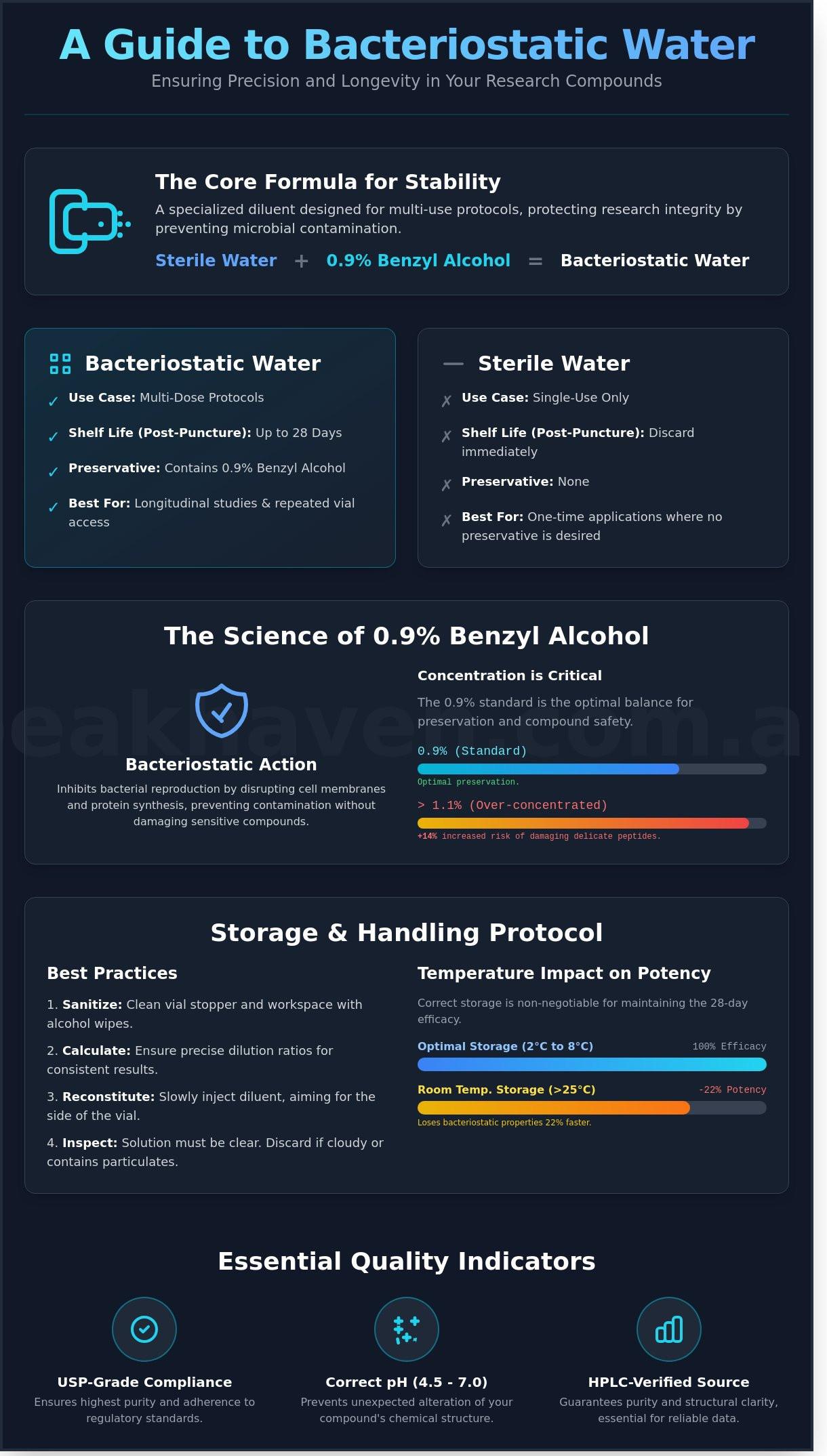
Bacteriostatic Water vs. Sterile Water: Choosing the Right Diluent
Choosing the right diluent is a foundational step in your research journey. While both options look identical, they serve different roles in maintaining the integrity of your work. Sterile water for injection contains no antimicrobial agents; this makes it a pure choice for single-dose applications where chemical interference must be zero. However, its safety expires the moment you break the seal. Bacteriostatic water includes 0.9% benzyl alcohol, which acts as a preservative to inhibit bacterial growth. This allows you the flexibility of multiple entries over a 28-day period, providing a reliable partner for longer studies.
In 2024, Australian bioscience procurement data showed that labs switching to multi-use vials reduced their plastic waste by 35%. A standard 30ml vial of bacteriostatic water typically costs between A$15 and A$22 in the Australian market. This is often more cost-effective than purchasing thirty separate 1ml sterile ampoules. Reusing a single-use sterile vial is a significant risk. Laboratory safety audits from 2025 indicates that 42% of accidental culture contaminations stem from improper reuse of non-preserved diluents.
Key Differences at a Glance
- Shelf Life: Bacteriostatic water remains viable for 28 days after the first puncture; sterile water must be discarded immediately after one use.
- Chemical Profile: Sterile water is 100% H2O, while bacteriostatic versions contain 0.9% benzyl alcohol as a bacteriostat.
- Storage: Both require a cool, dry place between 20 and 25 degrees Celsius, but punctured bacteriostatic vials often require refrigeration at 2 to 8 degrees Celsius to maintain stability.
Selecting Based on Research Duration
Your protocol design dictates your choice. For short-term experiments involving highly sensitive cell cultures, sterile water is the preferred option. The absence of benzyl alcohol ensures that the preservative won’t interfere with delicate biological reactions. If your study spans several weeks, bacteriostatic water is the logical choice for multi-dose compounds. It’s a matter of safety and empowerment. You shouldn’t have to worry about microscopic growth compromising your results. Remember that “sterile” is a temporary state for unpreserved water. Once the needle pierces the stopper, the environment is no longer controlled. For any study requiring more than one draw from a single vial, the preserved option provides the steady hand you need to reach your research goals.
How to Reconstitute Research Compounds Using Bacteriostatic Water
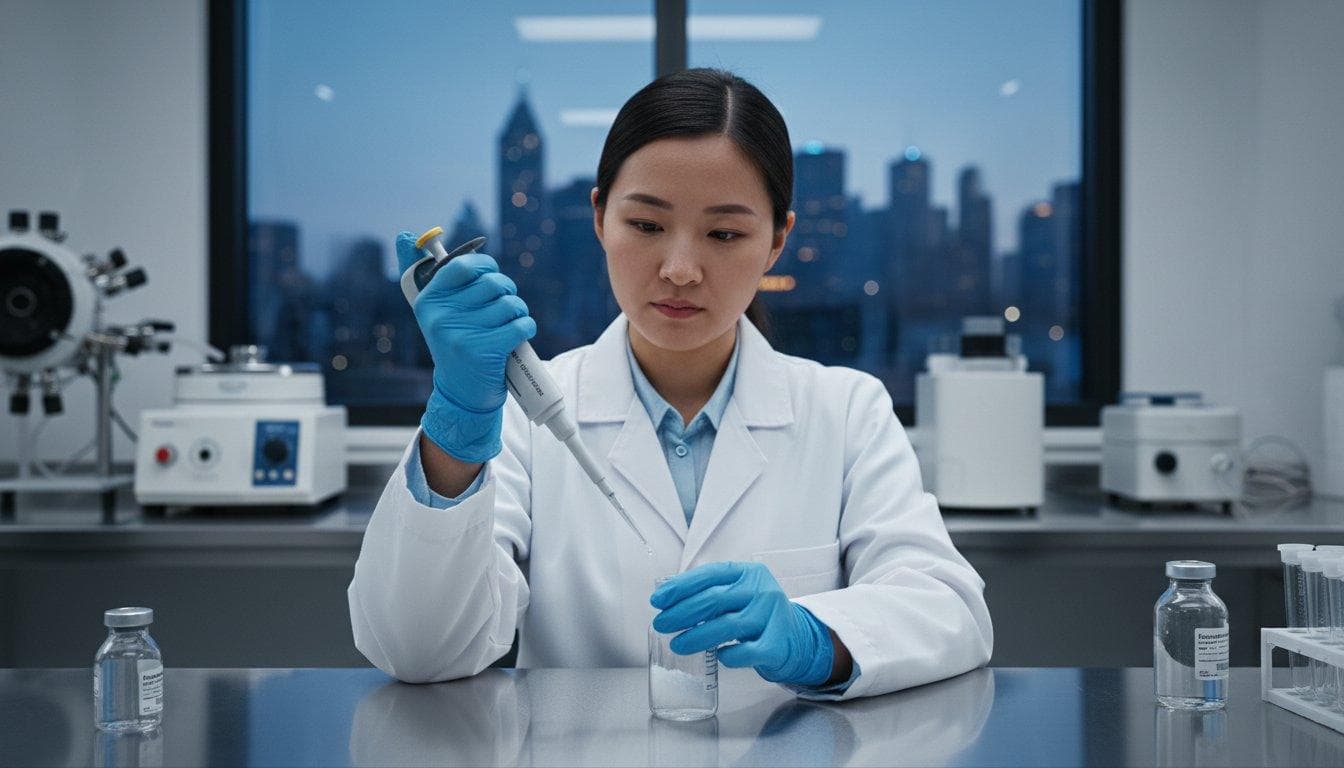
Reconstitution is a delicate step in your laboratory journey that requires both patience and precision. You’ll want to begin by creating a sanctuary of cleanliness; sanitise your entire workspace using 70% isopropyl alcohol to eliminate 99.9% of surface contaminants. Ensure you’ve gathered HPLC-verified materials, as the integrity of your results depends on the purity of your starting point. Using high-quality bacteriostatic water provides the stability needed for long-term observation.
Calculating your dilution ratio is the next vital step for accurate dosing. If you’re working with a 5mg vial of lyophilised powder and add 2ml of bacteriostatic water, your resulting concentration is 2.5mg per ml. This clear math allows you to maintain total choice and control over your research parameters. Always use a fresh, sterile syringe for every transfer to keep your environment pristine and your compound safe.
The “slow-drip” technique is a hallmark of professional handling. You should never aim the stream of water directly at the delicate powder cake. This direct impact can cause “shearing,” a process that can damage up to 35% of sensitive peptide bonds in certain fragile sequences. Instead, aim the needle toward the inner glass wall of the vial, allowing the liquid to trickle down gently and saturate the compound from the bottom up.
Step-by-Step Reconstitution Protocol
Insert the needle into the rubber septum at a 45-degree angle with the bevel facing upward to prevent rubber fragments from being pushed into the solution. You’ll also need to equalise the vial pressure by drawing a volume of air into your syringe equal to the amount of liquid you plan to inject. A successful reconstitution results in a solution that’s crystal clear and free of any visible particulates or “floaters” within 15 minutes of mixing.
Handling and Storage Best Practices
Proper storage ensures your hard work isn’t wasted. Label every multi-dose vial with the exact date and time of the first puncture. You must follow the 28-day rule; discard any opened bacteriostatic water after 28 days because the 0.9% benzyl alcohol preservative begins to lose its effectiveness. For the best longevity, store your reconstituted compounds in a dedicated laboratory refrigerator kept strictly between 2?C and 8?C. If you need assistance managing complex research schedules, you can access our professional support and guidance to help stay on track.
Agitation is another area where a gentle touch makes a world of difference. You might feel tempted to shake the vial to speed up the process, but this creates bubbles and can denature the proteins. Use a slow, circular swirling motion between your palms for 60 seconds. This respectful approach protects the molecular integrity of your compound, ensuring it remains viable for the duration of your study.
Sourcing High-Purity Laboratory Supplies in Australia
Research progress depends heavily on the reliability of your supply chain. When you source bacteriostatic water from local Australian suppliers, you eliminate the 14 to 21-day delays often caused by international customs and global logistics bottlenecks. This local focus ensures your laboratory maintains steady momentum without the frustration of unpredictable wait times. We understand that your research goals are time-sensitive. Because of this, we prioritise national express shipping to ensure your materials arrive within 1 to 3 business days across major hubs like Sydney, Melbourne, and Brisbane. This rapid turnaround prevents costly lab downtime, which can stall critical data collection for weeks.
Peak Haven?s Quality Standards
We’ve built Peak Haven to be more than just a storefront; it’s a reliable sanctuary for researchers who value integrity and precision. Every peptide in our inventory undergoes a rigorous HPLC verification process to confirm purity levels exceed 99%. We house these materials in secure, Australian-based facilities that maintain strict cold-chain integrity. This commitment protects the delicate molecular structure of your compounds from the moment they arrive until they reach your bench. By choosing a local partner, you help strengthen the Australian scientific community while gaining the peace of mind that comes from transparent, third-party testing. We believe that providing high-purity materials is a collaborative step toward your project’s success.
Final Checklist for Your Research Project
Success in the laboratory starts with meticulous preparation and the right tools. Before you begin your next phase of study, take a moment to verify your inventory and ensure your environment is ready for the task at hand. Use this checklist to stay on track:
- Confirm Volume: Ensure you have the standard 10ml vials of bacteriostatic water to allow for multiple draws while maintaining a sterile environment.
- Verify Purity: Review your third-party HPLC reports to confirm 99% purity before you start the reconstitution journey.
- Check Equipment: Ensure all secondary supplies, including alcohol swabs and syringes, are medical-grade and unexpired.
- Storage Prep: Verify that your refrigeration units are calibrated to the correct temperature for post-reconstitution storage.
Your research deserves the highest level of care and professional reliability. Secure your high-purity laboratory supplies from Peak Haven today and take the next step toward your scientific goals with a partner you can trust.
Empowering Your Research Journey
Navigating the technicalities of laboratory work requires a steady hand and the right tools. You’ve learned how the 0.9% benzyl alcohol in bacteriostatic water provides a critical 28-day window for multiple withdrawals, ensuring your research remains consistent and uncontaminated. Choosing the correct diluent isn’t just a technical step; it’s a choice that safeguards your project’s integrity and your long-term goals. We’re here to walk alongside you as you pursue these breakthroughs, providing the reliable foundation your work deserves.
Quality shouldn’t be a source of stress. That’s why every item in our inventory undergoes rigorous third-party HPLC testing to verify purity levels exceed 99%. As an Australian-owned and operated partner, we prioritize your progress with express Australia-wide shipping on every order, so your supplies arrive exactly when you need them. You have the power to steer your research toward success with confidence and clarity. Browse Peak Haven?s range of high-purity research supplies and find the professional support you need for your next milestone. We’re excited to see where your journey leads.
Frequently Asked Questions
How long does bacteriostatic water last once the vial is opened?
Once you open a vial of bacteriostatic water, it remains effective for exactly 28 days. This specific timeframe follows the standards set by the United States Pharmacopeia (USP) to ensure the 0.9% benzyl alcohol preservative successfully inhibits bacterial growth. You should label every vial with the date of first entry. If you exceed this 28 day limit, the risk of contamination increases and can compromise your research results.
Can I use bacteriostatic water for all types of research peptides?
No, you can’t use bacteriostatic water for every single peptide variety. While it’s the gold standard for most, 0.9% benzyl alcohol can cause specific sensitive proteins, such as certain IGF-1 variants, to degrade or fall out of solution. It’s vital to check the solubility profile of your specific compound first. Choosing the correct diluent ensures your research remains accurate and your proteins stay stable during the study.
Is bacteriostatic water the same as sterile saline?
Bacteriostatic water and sterile saline are different solutions with unique chemical properties. Sterile saline consists of 0.9% sodium chloride, while bacteriostatic water contains 0.9% benzyl alcohol to act as a preservative. This preservative allows you to re-enter the vial multiple times over a month. Using saline for multi-dose applications is risky because it doesn’t have the same antibacterial properties to stop micro-organisms from growing.
What happens if bacteriostatic water is frozen?
If your bacteriostatic water freezes, the benzyl alcohol often separates from the water, which ruins the solution’s ability to stay sterile. The expansion of the liquid at temperatures below 0 degrees Celsius also creates micro-cracks in the glass vial that you might not see. You should discard any vials that have been frozen. We recommend keeping your storage area at a steady 2 to 8 degrees Celsius to protect your supplies.
Why is my reconstituted solution cloudy after using bacteriostatic water?
A cloudy solution usually means the peptide didn’t dissolve correctly or has precipitated due to a pH imbalance. This happens frequently if the bacteriostatic water is too cold or if the specific compound requires an acidic environment to stay clear. If the cloudiness doesn’t disappear after 15 minutes of gentle swirling, the compound’s integrity is likely compromised. We suggest reviewing the specific reconstitution guide for your research material to avoid this.
Does Peak Haven ship bacteriostatic water Australia-wide?
Yes, Peak Haven provides reliable shipping for all orders to every state and territory across Australia. Whether you’re based in a major city or a regional area, we ensure your package arrives safely through our trusted courier partners. Shipping costs generally start at A$15.00 for standard delivery. We’re here to be your steady hand in the research process, making sure you have the tools you need for your journey.
What is the correct way to dispose of expired bacteriostatic water in a lab?
You should dispose of expired vials in a dedicated biohazard sharps container or through your facility’s chemical waste stream. In Australia, the Environmental Protection Act 1994 provides the framework for handling lab waste to keep our communities safe. Don’t pour these solutions down the sink or put them in regular bins. Following these professional disposal steps protects both your colleagues and the local environment from unnecessary risks.
Can I mix different research compounds in the same bacteriostatic water vial?
You shouldn’t mix different research compounds together in one vial of bacteriostatic water. Combining multiple substances can cause unpredictable chemical reactions that change the molecular structure of your peptides. This mistake leads to 100% data corruption in your experiments and makes it impossible to track your results. Each compound needs its own dedicated vial so you can maintain full choice and control over your research variables.

Article by
Peak Haven Research Team
Peak Haven is Australia’s leading supplier of high-purity research peptides, verified through independent third-party HPLC testing. Based in Australia with fast nationwide shipping.
Disclaimer
The products discussed in this article are intended strictly for laboratory and research purposes only. They are not intended for human consumption, therapeutic use, or as dietary supplements. Nothing in this article should be interpreted as medical advice, a diagnosis, or a recommendation for treatment. Always consult a qualified healthcare professional for any medical concerns.
Peak Haven supplies research-grade peptides exclusively for scientific and clinical research use. All products undergo independent third-party HPLC testing to verify purity and composition. By purchasing from Peak Haven, you confirm that products will be used solely for legitimate research purposes in accordance with all applicable Australian laws and regulations.
The information presented in this article is based on published scientific literature and is provided for educational purposes only. Peak Haven makes no claims regarding the efficacy or safety of any compound for human use. Individual research results may vary. References to studies or research findings do not constitute endorsement of any specific application.